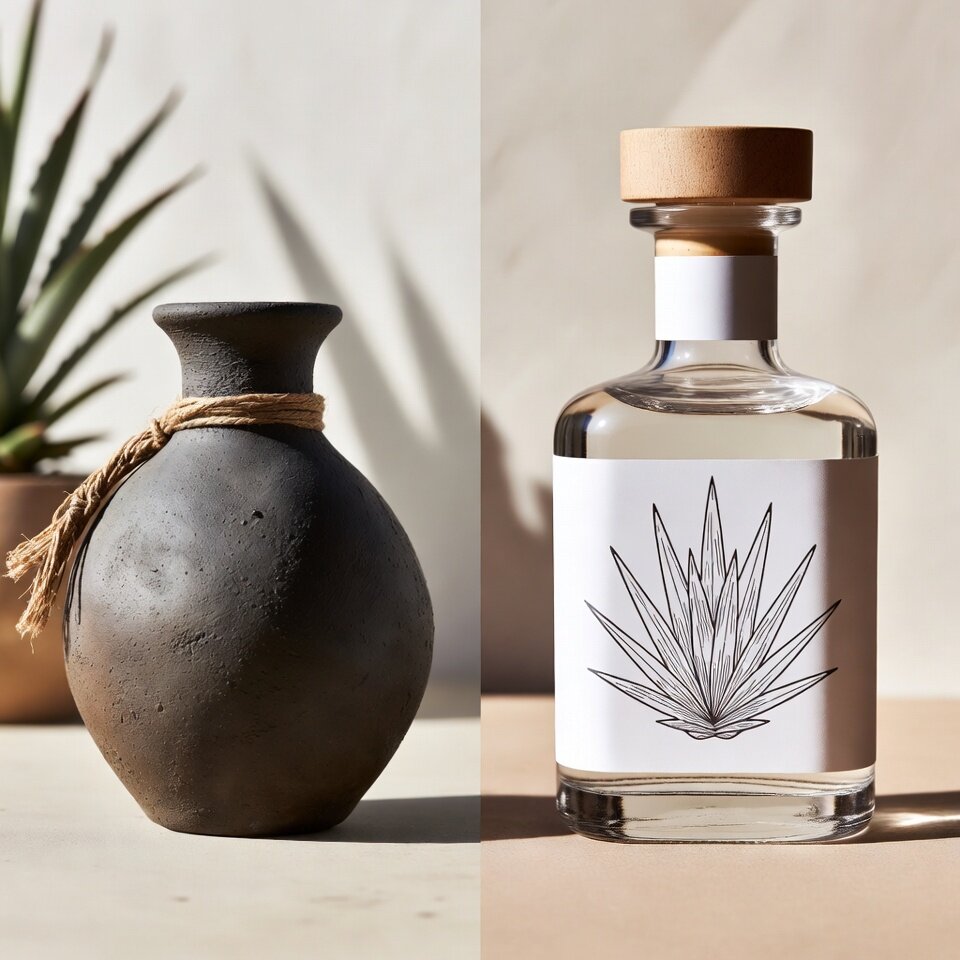
If you order both at the same bar, tequila and mezcal taste like cousins, because they are. Tequila is legally a type of mezcal. Both are distilled from agave, both come from Mexico, and the line between them is mostly about which agave goes in and how it gets cooked. That cooking step is also the entire reason their chemistry splits apart.
So if your question is which one is healthier, the short version is this: tequila wins on chemistry, mezcal wins on honesty. Here is what that means.
The split happens in the cooking pit
To make any agave spirit, you first have to cook the agave hearts (the piñas) to convert their starches into fermentable sugar. How you cook them decides almost everything that follows.
- Tequila steams the piñas in masonry ovens or industrial autoclaves. Clean heat, clean conversion, minimal smoke.
- Mezcal roasts them in wood-fired pits dug into the earth, often for days. This is where mezcal gets its signature smoke, and where the chemistry gets heavier.
That earth-pit roasting creates phenolic smoke compounds (guaiacols and cresols) and methanol precursors that survive distillation. They are the source of mezcal’s soul and its harder morning after. Mezcal is also typically finished in pot stills, which retain more congeners than the column-still finishing common in tequila.
The verdict on chemistry load
On a pure chemistry basis, blanco 100% agave tequila is the cleaner drink. By our hangover index, unaged blanco tequila scores around 4 out of 10, while even the lightest espadin joven mezcal lands around 5. The gap is not enormous, but it is consistent, and it comes straight from those roasting phenolics and the extra methanol.
If you are specifically trying to drink lighter, blanco tequila neat or with soda is the safer agave pour. Reach for an additive-free bottle and you have one of the cleaner aged-category spirits available. See our full tequila ranking for specific brands.
Where mezcal actually wins
Mezcal has one real, structural advantage: additives are banned outright. The DO Mezcal regulations prohibit any added sugar, coloring, or flavoring, full stop. Tequila, by contrast, permits up to 1% additives, and many mainstream brands use that allowance for caramel coloring, glycerin, and “mystic” flavor agents that smooth the spirit and can worsen the hangover.
So the comparison is not as lopsided as the chemistry number suggests:
- Blanco tequila can be cleaner in the glass, but only if it is verified additive-free. A heavily-doctored tequila within that 1% allowance can lose to an honest mezcal.
- Mezcal is guaranteed additive-free by law, but it pays for that purity with smoke phenols and methanol you cannot regulate away.
In other words, the floor for mezcal is high (no junk allowed) but the chemistry ceiling is heavier. Tequila can go lower than any mezcal, but only if you choose carefully.
How to pick, in practice
- Want the lowest hangover? Additive-free blanco tequila. It skips both the oak congeners of aged spirits and the smoke phenols of mezcal.
- Want zero additives, guaranteed, no label-reading? Espadin joven mezcal. The law has your back.
- Sensitive to smoke or prone to red-wine-style headaches? Tequila. Every mezcal carries some phenolic smoke, and sensitive drinkers report headaches even from “light” ones.
- Chasing maximum flavor and terroir? Mezcal, and accept the chemistry trade. It is the more characterful spirit by a mile.
For a side-by-side breakdown with serving-by-serving scenarios, see our tequila vs mezcal comparison. For the lightest individual bottles, see the healthiest tequila and healthiest mezcal rankings.
The bottom line
Tequila and mezcal are the same family tree, but the earth pit changes the chemistry. For a lighter body load, blanco tequila wins, as long as it is additive-free. For guaranteed purity with no fine print, mezcal wins, at the cost of smoke phenols and methanol that make the morning rougher. Neither is “healthy,” because both are alcohol, but if you are optimizing the agave shelf, blanco tequila is the cleaner default and mezcal is the honest indulgence.
Sources: Tequila Matchmaker on additive-free tequila, Consejo Regulador del Mezcal, Methanol and congeners in agave spirits (NIH), Alcohol Metabolism (NIAAA). SpiritFacts offers no medical advice.