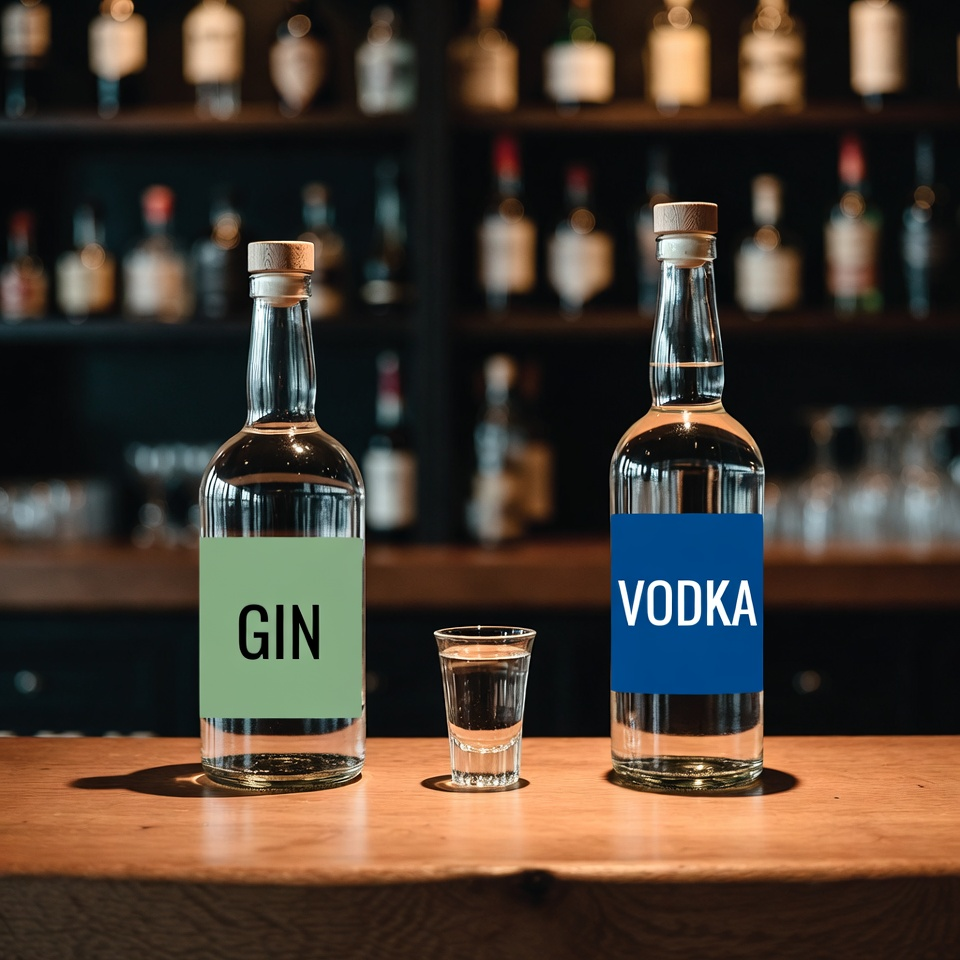
This is the closest matchup on the whole shelf, because gin is vodka that took a detour through a botanical still. You start with the same neutral spirit, the same clean base, and then you redistill it with juniper and a handful of other botanicals. The foundation is chemically identical. So the honest answer to “which is healthier” is: barely either, and here is exactly where the sliver of difference lives.
They start as the same liquid
Both vodka and gin begin as a highly rectified neutral spirit, distilled enough times that almost nothing remains but ethanol and water. That is why both land in the lightest-load tier of any spirit. By our hangover index, vodka scores a 2 out of 10 and gin scores a 3, the two lowest marks of any category. Compare that to bourbon at 7 or red wine at 8 and you see how close these two really are.
The single point of difference is the botanicals. When gin is redistilled over juniper, citrus peel, coriander, and the rest, it picks up trace botanical oils that vodka never carries. Those oils are what make gin taste like something. They are also the only thing your liver has to deal with that a vodka drinker’s does not.
The verdict: vodka wins by a hair
On pure chemistry, vodka is the marginally cleaner drink. It has no flavor compounds to clear at all, just ethanol and water. Gin is a half-step behind only because those botanical oils exist.
But the gap is almost theoretical for classic gin. London Dry gin, which by definition has no sugar added after distillation, is functionally identical to vodka on hangover load. Tanqueray, Beefeater, and Bombay Sapphire are clean, sugar-free, and sit right alongside vodka. If you drink a London Dry G&T with soda instead of tonic, you are essentially drinking flavored vodka as far as your body is concerned.
Where gin loses real ground is the modern, contemporary style. Gins with post-distillation flavoring (rose, cucumber, citrus essences) or “pink” and flavored variants reintroduce two problems vodka solved: histamine-style trigger compounds and, often, added sugar. That is the gin that gives some drinkers headaches when plain vodka never does.
When the difference actually matters
For most people, on most nights, this is a coin flip. The deciding factors are narrow and personal:
- You drink it neat or with soda water: essentially a tie. Pick the flavor you want.
- You are sensitive to citrus, juniper, or get gin headaches: vodka. It contains none of the botanical triggers.
- You want flavor without sugar or congeners: London Dry gin. It tastes like something while staying in vodka’s chemistry tier.
- You need maximum gluten safety: corn-based vodka (Tito’s, Smirnoff No. 21). Distillation removes gluten from any spirit, but corn-based bottles are the safest for severe sensitivity.
- You are drinking a martini or a G&T: gin is the design intent; vodka is just a neutralizer in those drinks.
One thing that does not separate them is calories or sugar. At the same ABV they are identical, around 96 calories per 1.5oz, with no carbs in either unflavored vodka or London Dry gin. Whatever calorie or hangover damage you take comes from the mixer, not the spirit. A sugary tonic or a sweet flavored gin will do far more than the choice between the two base liquids ever could.
The bottom line
Vodka and gin are the same drink wearing different clothes. Vodka wins on pure purity, but London Dry gin is within rounding error, and both are the lightest spirits you can pour. Choose vodka if you want the absolute cleanest base or you react to botanicals; choose London Dry gin if you want that same low load with actual flavor. The only real mistake is a flavored or pink gin loaded with sugar, which throws away everything that made the category clean in the first place.
For a side-by-side breakdown with serving scenarios, see our gin vs vodka comparison. For specific bottles, see the healthiest gin and healthiest vodka rankings. And if you drink Beefeater, note that it quietly dropped to 40% ABV.
Sources: Alcohol congener content and hangover severity (PubMed), Gin production and botanicals (Wikipedia), Distillation and gluten removal (Beyond Celiac), Alcohol Metabolism (NIAAA). SpiritFacts offers no medical advice.